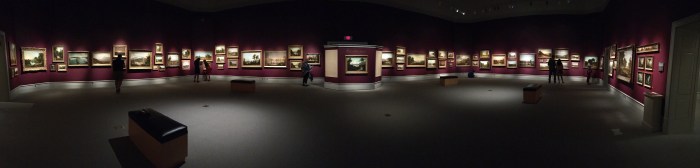
 Edmund Burke’s chief contribution to aesthetics is his exegesis on the contrary states that define the Beautiful and the Sublime: these are the regular and irregular, binaries of pleasure and pain, appeal and terror, knowingness and not-knowing. Burke encourages the viewer of a ‘place’ to distance herself from the natural agencies that incite emotional response to landscapes. In keeping a distance; however, we risk participating in a lifeless, hegemonic practice that colonizes nature and hinders aesthetic engagement. Proximity to nature (rather than detachment from it) makes visible the consequences of eighteenth-century imperial and nineteenth-century nationalist missions masked in many of the works of the Hudson River School. Non-native forces in the Western Hemisphere took ownership of humans, places, resources, and in the process, devastated whole peoples and ecologies. Through travel, study, research and creative activity, students will learn to see and appraise the transformation of peripatetic practice into art; as well as witness how art can both reveal and conceal the nature of place. How have the varied notions of sublimity affected artist practice over the past 250 years? What are artists making now that counters a narrative that privileges detachment over intimacy and counters modernity’s embrace of indifference? This course will consider the concept of sublimity, both as subject and agent, in the work of visual artists during the aforementioned epochs and the present one.
Images from the Fall 2017 Journey into Substance Expeditionary Course
to the Hudson River Vally, Berkshires, Catskills, and North Maine Woods


 Histories Drawings Prints